Everything you need to know about gorilla trekking in Volcanoes National Park — permits, fitness, best time to go, what to pack, and what happens on trek day.
What Is Gorilla Trekking?
Gorilla trekking is a guided hike into the bamboo and hagenia forests of Rwanda's Volcanoes National Park to spend one hour with a habituated mountain gorilla family. Rwanda is home to roughly one-third of the world's remaining 1,063 mountain gorillas, and the Volcanoes National Park — a 160 km² stretch of the Virunga Massif — is the most accessible and well-managed trekking destination on earth.
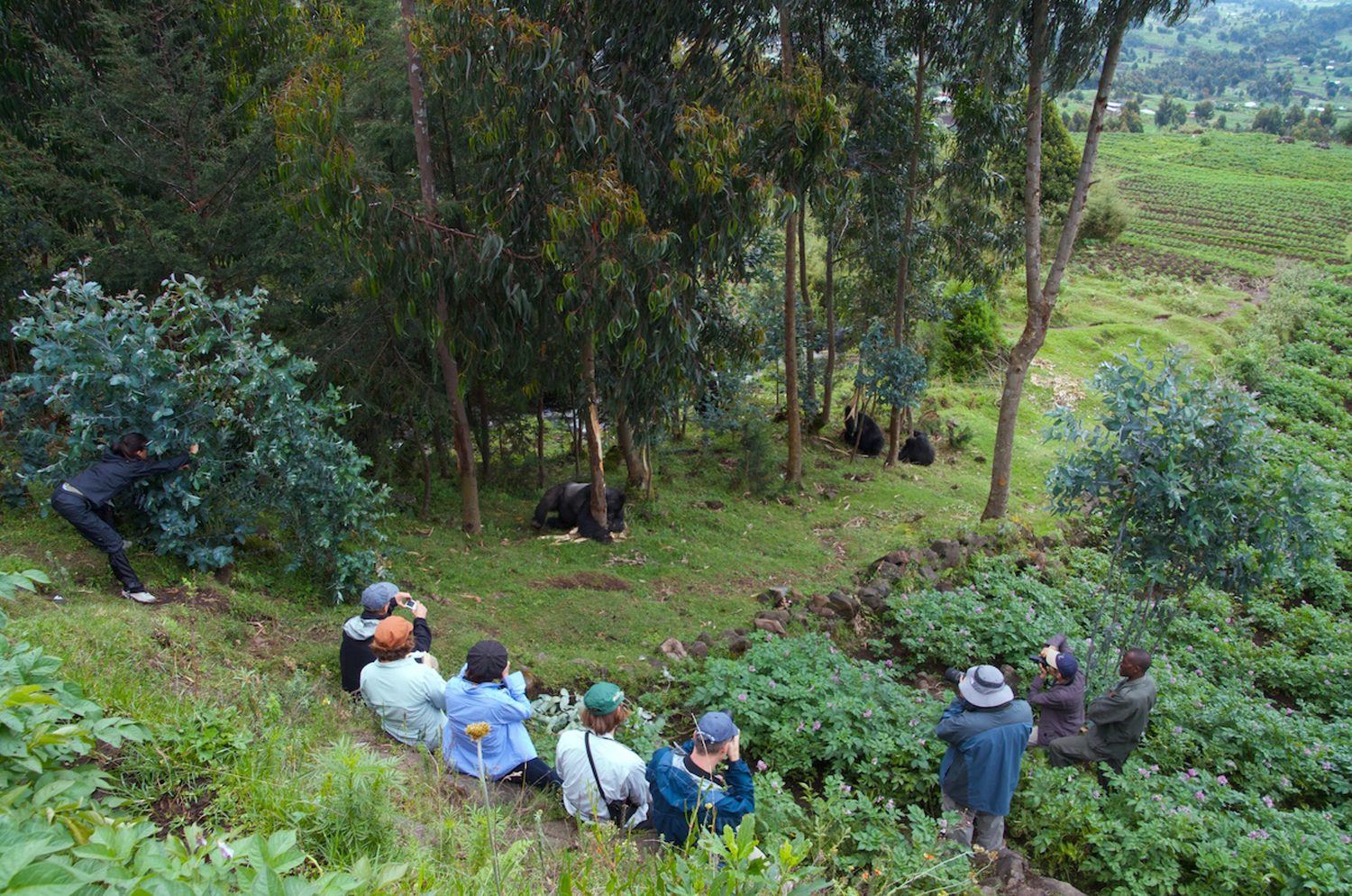
Unlike a traditional safari where you observe animals from a vehicle, gorilla trekking is a walking experience. Small groups of up to eight visitors are assigned a specific gorilla family and led by Rwanda Development Board (RDB) rangers and trackers who have been following these families daily for decades. The trek through volcanic terrain can take anywhere from 30 minutes to 4 hours depending on where the gorillas have moved — and then you sit, breathe, and watch.
How Much Does a Gorilla Permit Cost in 2026?
A standard Rwanda gorilla trekking permit costs USD $1,500 per person. This is a fixed price set by the Rwanda Development Board (RDB) and is non-negotiable regardless of which tour operator you book through.
However, Rwanda offers a compelling discount: the Combo Permit. If you combine gorilla trekking with a visit to either Akagera National Park (Big Six) or Nyungwe Forest National Park (chimpanzees), the gorilla permit drops to USD $1,050. This 30% saving is one of the best-kept secrets in East African safari planning.
Permit prices include park entry, ranger escort, tracker team, and the one-hour visit with the gorilla family. They do not include transport, accommodation, meals, or guide tips.
Best Time to Go Gorilla Trekking
Rwanda is a year-round gorilla trekking destination, but conditions vary by season:
Dry Season (June–September): The most popular months. Trails are firmer, visibility is better, and the chance of rain during your trek is lower. Book 6–12 months ahead — permits sell out.
Shoulder Season (October, March–May): Fewer visitors, lush vegetation, and baby gorillas born during the wet months are a few weeks old. Light rain is common but rarely heavy enough to cancel treks. Permits are easier to secure.
Low Season (November–February): The wettest months, but gorilla trekking still operates every day. Trails can be muddy and slippery, but the forest is at its most dramatic. Some lodges offer reduced rates.
Festive Period (Dec 22–Jan 6): Demand spikes again despite the rain. Book as far in advance as dry season.
What Fitness Level Do You Need?
Gorilla trekking is moderately demanding. You will hike at altitudes between 2,500 and 4,000 metres through uneven, sometimes muddy terrain with steep sections. However, the vast majority of trekkers — including those in their 60s and 70s — complete the trek successfully.
Tips to prepare: - Walk regularly for 4–6 weeks before your trip, including hills or stairs. - Hire a porter at the trailhead (USD $20, highly recommended). They carry your daypack and offer a steadying hand on steep sections — plus, porter fees directly support local communities. - Wear waterproof hiking boots with ankle support. - Bring trekking poles (most lodges provide them). - Start slowly and pace yourself — the rangers set the pace.
What to Pack for Gorilla Trekking
Essentials: - Long-sleeved shirt and trousers (tuck into socks to deter ants) - Waterproof jacket or poncho - Sturdy waterproof hiking boots with ankle support - Gardening gloves (for grabbing vegetation on steep sections) - Wide-brimmed hat and sunscreen - Insect repellent - 1–2 litres of water - High-energy snacks - Camera without flash (phone cameras are fine)
Do not bring: - Drones (strictly prohibited) - Flash photography - Food near the gorillas - Perfume or strongly scented products
What Happens on Trek Day
You arrive at Volcanoes National Park headquarters in Kinigi by 7:00 AM for a briefing. Rangers divide visitors into groups of eight and assign each group a gorilla family based on fitness level and trekking experience.
By 8:00 AM you set off with your ranger, tracker, and porter. The trek crosses farmland before entering the national park boundary — marked by a stone wall. From there, you ascend into bamboo forest, transitioning to hagenia woodland and, at higher elevations, alpine meadows.
When the trackers locate the gorillas, you leave your bags, approach quietly, and spend exactly one hour at a minimum distance of 7 metres. You watch silverbacks drum their chests, mothers nurse infants, juveniles wrestle in the undergrowth. It is, without exaggeration, one of the most moving wildlife encounters on earth.
Afterward, you descend to the trailhead for a certificate ceremony and return to your lodge by early afternoon — leaving the rest of the day for reflection, a spa, or a cultural visit.
Let Gerry compose your journey.
Share your dates, interests, and group size. We reply within one working day with a private proposal.
Begin Inquiry